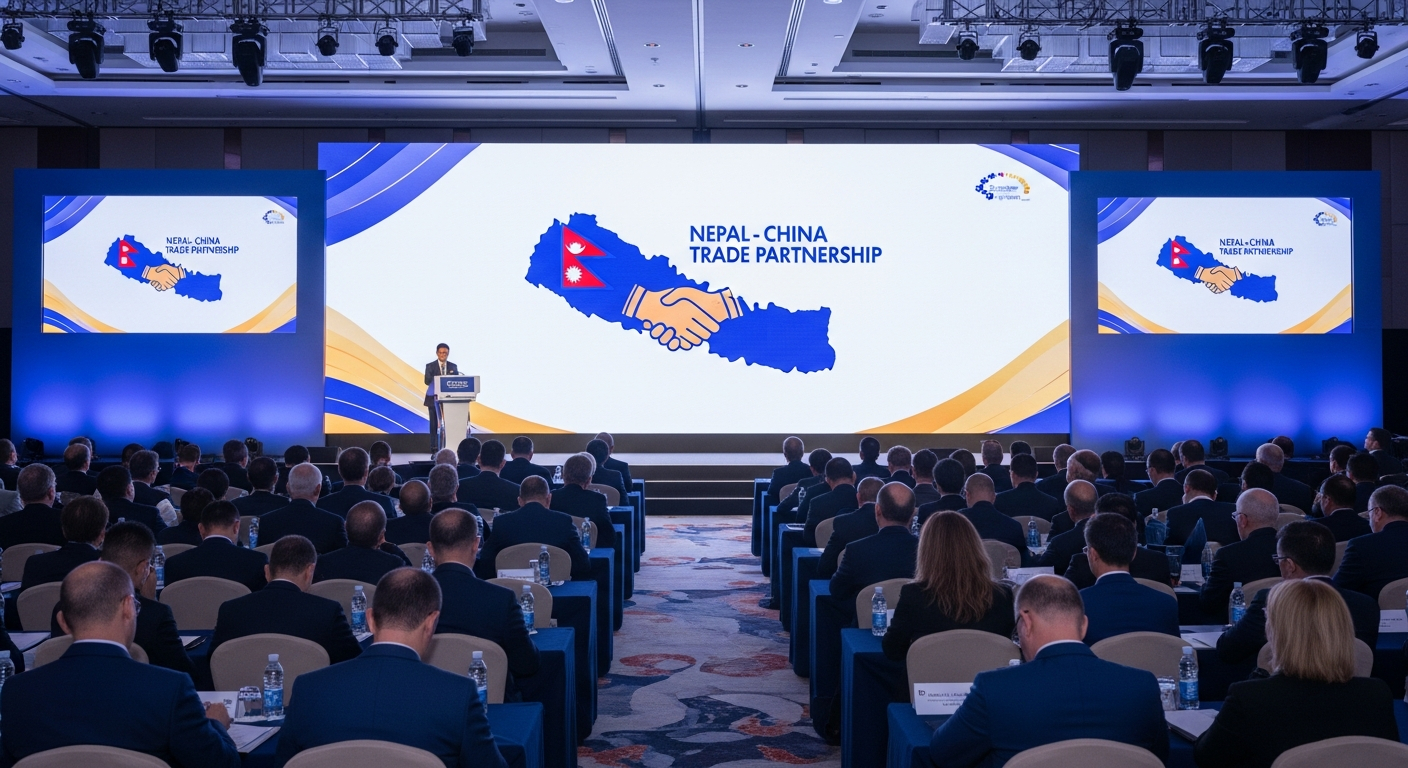
Business leaders, trade officials, and economic researchers from Nepal and China gathered at Soaltee Crowne Plaza for a full-day conference addressing cross-border trade facilitation, investment frameworks, and the untapped economic potential of the trans-Himalayan corridor.
Opening Plenary
Nepal’s Minister of Industry, Commerce and Supplies opened the conference with an address outlining the government’s priorities for bilateral trade growth — streamlining customs procedures at the Tatopani and Kerung border points, expanding the list of commodities eligible for preferential tariff treatment, and establishing a joint investment promotion board. The Chinese Commercial Counsellor responded with a detailed briefing on China’s revised guidelines for infrastructure investment in South Asia under the Belt and Road Initiative.
Sector-Specific Sessions
- Agriculture and Agro-Processing: Opportunities for Nepali tea, coffee, and herbal products in Chinese consumer markets
- Tourism and Hospitality: Joint marketing strategies to position Nepal as a premium destination for Chinese travellers
- Information Technology: Cross-border digital payment systems and e-commerce platform development
- Hydropower and Energy: Investment frameworks for Nepal’s untapped hydroelectric potential with Chinese engineering partnerships

Outcomes and Commitments
The conference produced a joint communiqué signed by the Federation of Nepalese Chambers of Commerce and Industry and the China Council for the Promotion of International Trade, committing both bodies to annual trade missions, a shared database of verified exporters and importers, and a mentorship programme pairing experienced Chinese manufacturers with Nepali small and medium enterprises seeking to scale.
Geography made us neighbours. Trade will make us partners. It is the Academy’s role to ensure that partnership rests on knowledge, trust, and mutual benefit.
Bijay Tamang, General Secretary, Nepal China Academy
Proceedings and presented papers will be compiled into a volume published by the Academy’s research division, available in both English and Chinese, and distributed to trade bodies, embassies, and university libraries in both countries.